FocusMax not behaving

After the easy upgrade to ASCOM v6 and the install of the latest FocusMax it now turns out that it does not work anymore.

The thing is now I don’t have a copy of ASCOM 5.5 anymore and I can’t fine a copy online either. I do have ASCOM v5.0 as that may be worth a try.

The thing is all I did was upgrade ASCOM and install the latest FocusMax and now FM won’t create a V-curve when setting up the ‘First Light Wizard’. I can’t even get it to work by using the ASCOM simulator. I think I need to get back to the Yahoo FocusMax Group and ask them a few more questions.

I have been thinking about just using the in-built focus functionality in Maxim DL, as it seems similar. The worse thing is you cannot try to fix it and test it all out unless it’s a clear night, but you don’t want to be messing about trying to fix things – you want to be imaging or observing.

My Moon Image Published in Astronomy Now

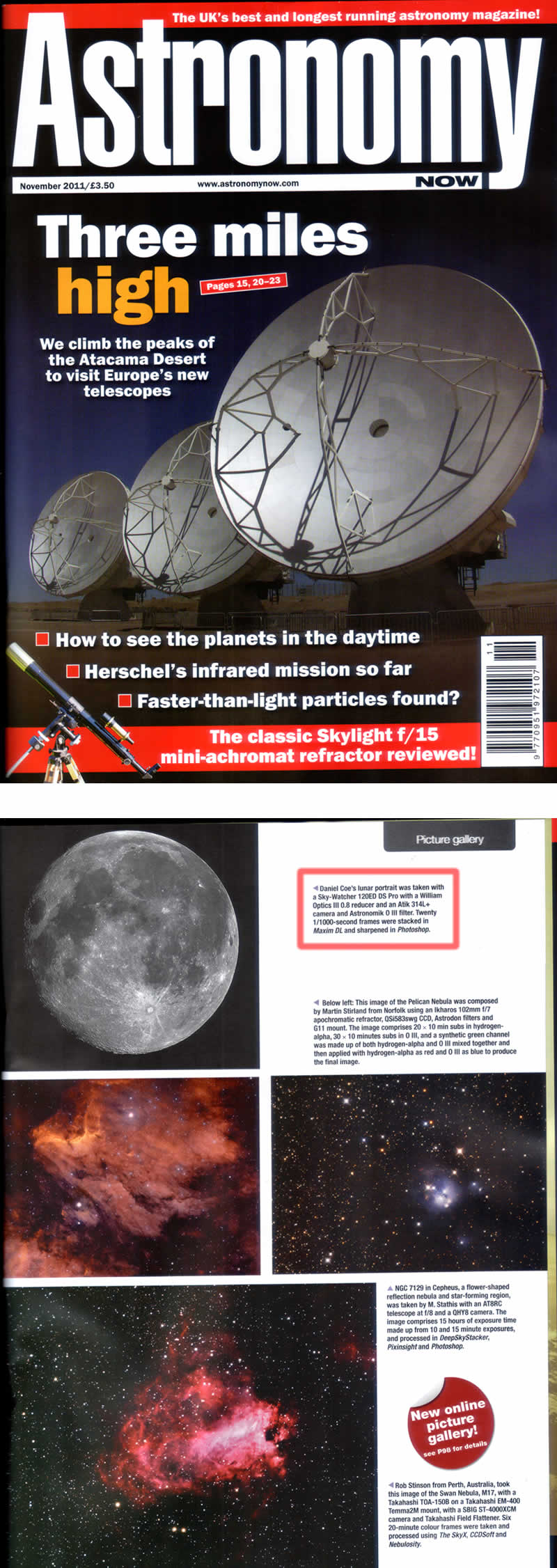
I submitted the Harvest Moon image I took to AstronomyNow magazine (blog post here – https://www.astronomylog.co.uk/2011/09/15/harvest-full-moon/) and I am lucky enough to have had it published.

Click on the image opposite to enlarge it or view the PDF version here.

My image is at the rear of the magazine in the ‘photo gallery’ section of Astronomy Now magazine (Astronomy Now Magazine, November 2011 edition), I am lucky enough to have had a few of my images on the TV (Stargazing Live, Look East, Anglia TV) but never in a magazine.

It’s funny as this is the 1st photo I have ever sent to Astronomy Now and it got published. I just need to get in Sky at Night magazine and on the Sky at Night TV program and then I have cracked it!

It’s also seems the images that are easy to take seem to come out the best. I think I will try and send AstronomyNow magazine an image more regularly now.

You can subscribe to AstronomyNow magazine and a lots more astronomy magazines here.

ASCOM Version 6 Upgrade

I thought about it for a while, but finally decided to upgrade from ASCOM v5.5 to ASCOM v6 as I wanted to use the latest version of FocusMax and that only runs on ASCOM v6.

The upgrade is painless, go to the ASCOM website and install the v6 software straight over the top of v5, no need to un-install your old ASCOM software as the new v6 installer takes care of it.

I then checked my Starlight Xpress USB filter wheel, Atik 314L+ camera and Maxim DL, and everything seemed ok. It was not until a clear night arrived I then found a problem. Maxim would not connect to the HiTech Astro DC Motor Focus controller.

So I looked on the HiTech Astro site but they said all their drivers had been tested on ASCOM v6. I then noticed that the HiTech Astro DC Focuser required .Net Framework v4 and I only had .NET v2 installed. So I downloaded that from Microsoft then waited for the install and then waited again whilst it found more updates. I then re-booted the PC and found I could still not connect to the focuser in Maxim or through the Hitech Astro program. I then decided to un-install the Hitech Astro program and re-install it, still no good.

My final try was to use the ASCOM v6 diagnostics program that comes with ASCOM. It runs through all your attached devices and checks them.

About 30 seconds later it then said “There is something wrong with your HiTech focuser software do you want to fix it?” Of course I clicked yes, and it fixed it! Brilliant.

So if you are ever in a fix with something not working in ASCOM, it is worth running the ASCOM Diagonstics program.

Harvest Full Moon

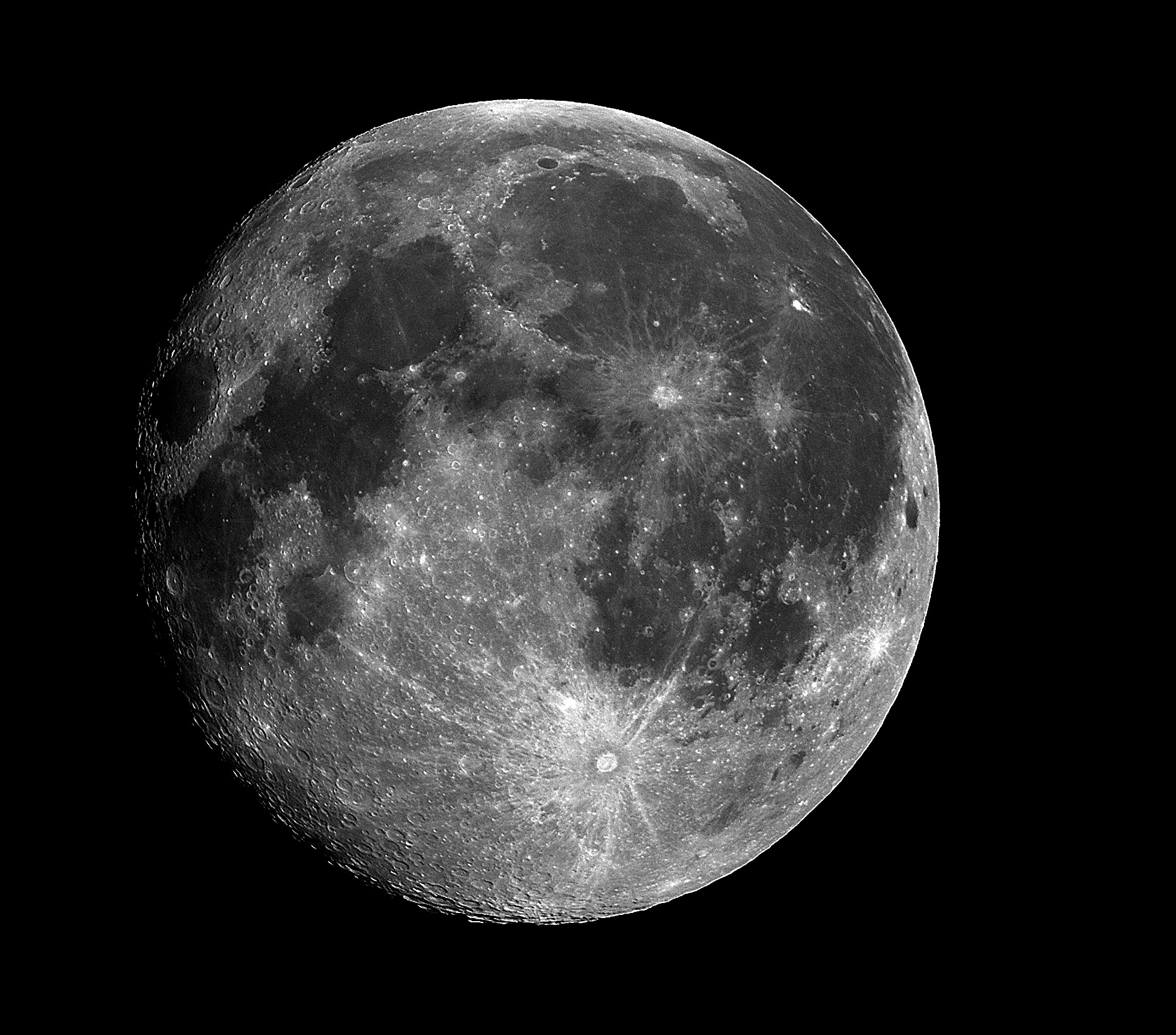
Decided to try and image the full harvest moon the other night. When the moon is so bright there is not much else you can image other than doing some Hydrogen Alpha imaging.

I decided to use my new Skywatcher 120ED DS Pro. It was taken with a William Optics 0.8 reducer, through an OIII filter and with my Atik 314L+ camera.

The moon was so bright I actually used a zero second exposure in Maxim DL. I took 20 frames and then stacked them in Maxim DL and then imported the image into FITS Liberator and performed a stretch. Then into Photoshop CS5 in order to manipulate the curves, levels and to add an Unsharp Mask.

Harvest Moon

John Lewis Telescopes

Whilst I was searching lately for a new Skywatcher telescope I was amazed to see that John Lewis appeared in the lists on Google. So I had to have a look, John Lewis now sell telescopes. They don’t sell too many, about 7 in total. Maybe telescopes are becoming mainstream, maybe it’s the Brian Cox effect?

John Lewis currently stock the following telescopes:

Still a great Christmas present for the budding astronomer and a great place to start.

View all the John Lewis Telescopes

Solar Image with Coronado PST and Canon SLR

I decided to have a look at the Sun today whilst it was out for a change and not cloudy. The weather this summer in 2011 in the UK has been terrible cloudy by day and cloudy by night.

I began by putting my standard Coronado PST on my Manfrotto tripod and put in my 9mm eyepiece, I had a good look around and decided to try and attach my Canon 550D to the telescope and take an image. I had not done this before as I usually image with my PST on my EQ6 mount and then use my Imaging Source DMK21 camera to do the imaging. The only problem with doing this is that the CCD chip is quite small at 640×480 so you can never get the whole of the solar disc in the image, you would need to create a mosiac. This is something you don’t have to do the with the large CCD sensor of a modern DSLR camera.

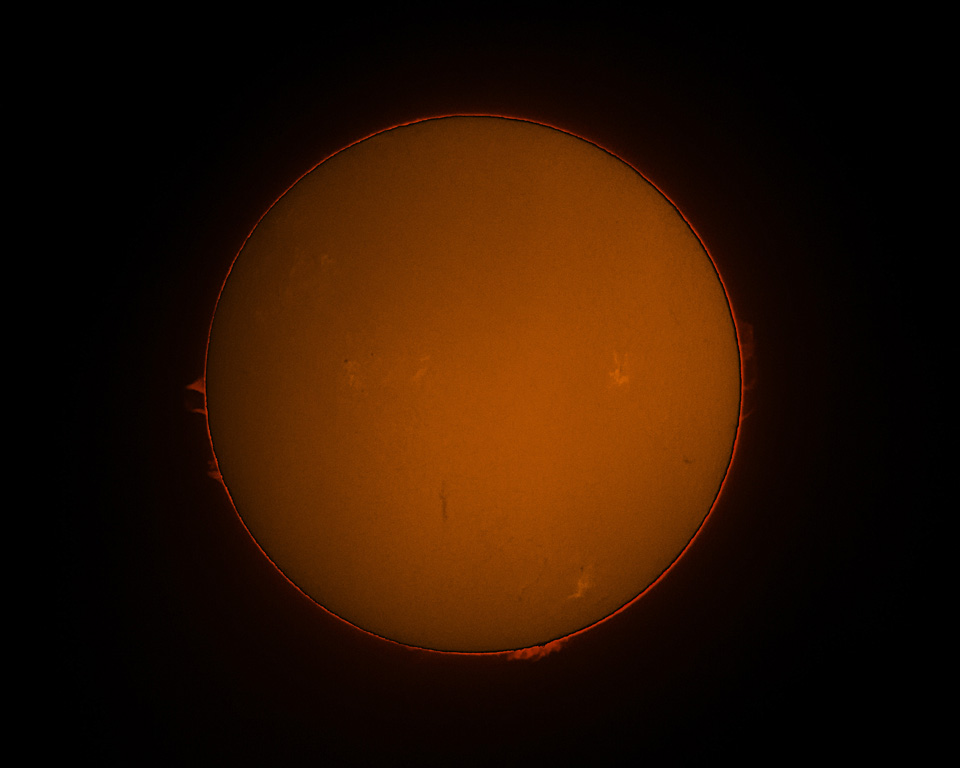
Anyway, I added my T-ring to my DSLR and attached a 1.25″ nosepiece and my trusty 2.5x Televue Powermate. I managed to get the image in rough focus and take a few images, not expecting much. But I was pleasantly surprised to see that I had managed to capture prominances in one image and surface solar detail in the other images.

This was not guided and it was clumsily handheld, I did set the 2 second timer on the SLR to try and cut down on the camera shake, as my Manfrotto tripod could barely hold the weight of the PST, DSLR and Powermate.

Prominances layer: 1/125 exposure, auto ISO (it selected ISO1000)
Surface detail layer: 1/1000 exposure, auto ISO (it selected ISO1600)

The two images were then put on top of each other and tweaked in Photoshop.

So there could be some more work to do in order to lower the ISO setting to try and reduce the noise, but otherwise I was very happy considering it was handheld and not guided.

Click on the image below to enlarge it.

Solar Image with Coronado PST and Canon 550D Handheld Unguided

Cosmic Challenge Book Review

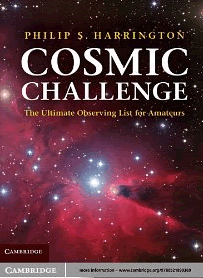
Cosmic ChallengeCosmic Challenge contains nearly 500 pages and lists over 500 star targets for you to find. The book is aimed at both beginners and advanced astronomers alike, as the book contains a mix of Solar System and deep-sky targets to hunt for.

The first 25 pages of the book tell us about our own eyes and how they work, as well as information on binoculars, collimation, using baffling/flocking, eyepieces, the best filters to use on what objects and the things to think about when it comes to your observing site. This includes information on the jet stream, the Pickering seeing scale, the Bortle scale of darkness and more.

Cosmic Challenge is then split into objects you can hunt out with your naked eyes, binoculars, small telescopes (3 to 5 inch) and giant binoculars, medium telescopes (6 to 9.25 inches), large telescopes (10 – 14 inches) and very large/monster telescopes (15+ inches).

I think it was a great idea to divide the book up this way, as you don’t want to find yourself looking for an object like Palomar 1 with a 3 inch telescope. Having the naked eye chapter also means you don’t even need a telescope to benefit from Cosmic Challenge. Then if you do decide to invest in some large binoculars or a larger telescope you can then come back to this book and try hunting some more elusive targets.

There are also then subsections within each size of telescope required, informing you in what season the object is visible.
Each of the 188 targets in the book are well laid out and begin with a large title with RA and Dec co-ordinates, the name of the constellation and magnitude information. There is then a diagram within the constellation (if applicable) of where to find the object. Each target also contains a very nice description of the target and it’s background plus tips on how best to view it.

There are three appendices. The first appendix is called the cosmic challenge, this displays all of the 188 targets into a large table for easy reference. The second appendix is a guide of suggested further reading whilst the last appendix supplies you with 100 challenging double stars to try and locate.

Cosmic Challenge is a very fun book, what makes it so good is that the layout is very pleasing on the eye and objects are really easy to find in the book (maybe not so easy in the sky!). Another great thing about Cosmic Challenge is that the book has longevity as I mentioned before. As you could use the book at various times of the year as the sky changes, and again if you decide to upgrade your telescope aperture. Also you don’t even need any astronomical hardware to use this book, just your own eyes as it contains 21 naked eye challenges.

The Cosmic Challenge book is available at Waterstones

Skywatcher New Quattro Telescopes

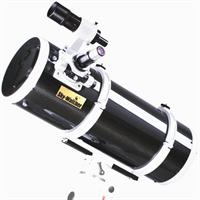
Skywatcher Quattro f4 Newtonian TelescopeThere seems to be an array of new Skywatcher telescopes coming out soon. They range from the Quattro f4 Newtonian telescopes which are coming out both in Steel and Carbon Fibre.

Why offer both, it just adds more confusion, as I can’t make up my mind whether to buy a Carbon Fibre version or the steel, or whether to go for the 8″ or the 10″ version.

The 8″ non-CF is going for £399, 8″ CF for £599, 10″ non-CF £520 and 10″ carbon fibre for £799. There is even details of a 12″ version but that will just be in steel at the moment.

Does carbon fibre really make that much difference? I am thinking of only using the scope for some planetary imaging and perhaps some deep sky targets that require the extra light gathering capability.

It’s not just the carbon fibre or steel versions I have to think about, but if I go for a 10″ version, then I will also need to purchase an A3 EL light panel to go with it, otherwise if I buy the 8″ model, I only need an A4 light panel, but the difference in price of these is small, about £30.

As this would be my first newtonian for a while, I would also need a collimation tool and let’s no forget probably a dew shield or dew strap, and a Bahtinov mask. The cost is starting to rise!

I also saw that Skywatcher are planning some 5 element 120ED and 150ED refractors, which look really good. But who knows the prices on these. I expect we need to think about £2,000-3,000 for the 150mm and probably £1,500-2,500 for the 120mm?

We may have to wait for these scopes though, probably until October 2011, is it worth the wait, will they just be too expensive for most of us, and I will have to resort to getting a 120mm ED DS Pro Black Diamond instead at around £1,000.

Patrick Moore Data Book of Astronomy Book Review

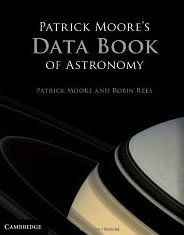
Patrick Moore Data Book of AstronomyThis is a very heavy and solid book which includes an enormous amount of detail within its 575 pages. This is the latest edition of Patrick Moore’s book and it’s the first time I have seen an astronomical  book of this type containing so much data.
The data collected in this book is very much up to date and anyone interested in say the facts about the dates of the return of periodic comets with be very happy indeed.

The book begins with data about all of the planets within our Solar System which consumes the first 250 pages or so. The book  then contains information on comets, meteors and meteorites, as well as information on double stars, variable stars, stellar clusters, nebulae, galaxies and finally the constellations and a star catalogue.

At the rear of the book you will find details on observatories around the world, as well as the history of astronomy and a list of well known astronomers, there is also a handy glossary.

You won’t find any colour images in this book, but there are is a smattering of black and white images, such as one of Patrick Moore’s outline Moon maps, constellation drawings and surface details of some satellite worlds  as well as the odd image of asteroids.

Jupiter is covered in 20 pages and no less than 63 satellites are included together with the four Galilean satellites covered in even more detail. The actual work that gone into creating this book is amazing.

It’s nice to see even simple data displayed well such as the list of Solar Eclipses, in this list they date back to 1923 and you can find all of the upcoming solar eclipses up to the year 2039.

I think Patricks Moore’s Data Book of astronomy amazing, but probably not a book for the beginner. This is definitely a book you will keep coming back to time and time again in order to obtain the astronomical information you need for planning an observing session, astronomy training course material or as an educational text.

Patrick Moore’s Data Book is available at Waterstones

Coronado PST Images

Well I went out and purchased a Coronado PST from ScopesNSkies the other week and was itching to try it out, but it seems since I have bought it, it’s now cloudy every day – typical! I did get to put it on my NEQ6 mount and do some imaging one Sunday morning though.

I used my Televue Powermate 2.5x with my DMK21 camera for these shots. The video was stacked using Registax 6.

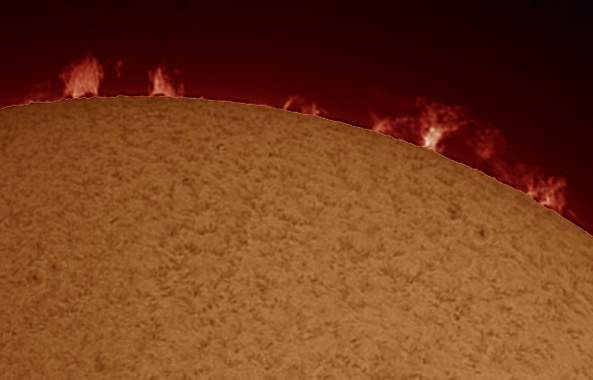
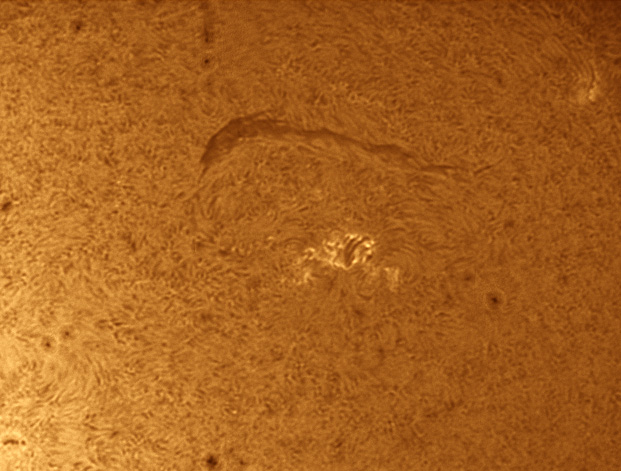
These images show the Sun in Hydrogen Alpha or Ha. I think for the price of the scope it does not do a bad job. This a basic entry level version of the Coronado PST which can be purchased for just over £450 new.

I was not so happy with the first image, I took two images for this shot and then layered them in Photoshop, but to me they still look a bit fake, perhaps because I added the false colour first to each and then layered them, next time I will layer them first and then flatten the image and add the false colour.

Coronado PST Image 2.5x Powermate and DMK21

Coronado PST with Televue Powermate 2.5x and DMK21 Camera

But overall I am quite happy with my first efforts, I have also subsequently learnt how to take flats against the Sun, so I need to subtract the flats next time to remove the dust bunnies. Then I just need more Sun and more free time!