
Night Sky Almanac 2027
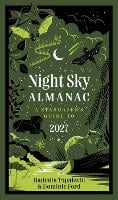
Because this is an almanac rather than a narrative book, its structure naturally follows the twelve months of 2027. Each monthly chapter opens with an overview of major astronomical events, key lunar phases, planetary movement charts, and expected meteor showers. What sets this guide apart from standard digital planetarium apps is its deliberate curation. Instead of overwhelming the reader with endless tables of dense numerical data, the authors carefully select the most dramatic and interesting visual highlights for every month. The almanac caters to readers across both the Northern and Southern hemispheres, offering sky maps tailored to different latitudes alongside historical notes that celebrate significant anniversaries in space exploration and observational science. Interspersed throughout are short feature pages that explore the mythologies behind famous constellations, explain the mechanics of lunar eclipses, and provide practical tips for spotting subtle celestial sights like zodiacal light or noctilucent clouds.
Topalovic and Ford write with impressive clarity. Their prose avoids overly dense technical jargon without dumbing down the underlying astrophysics. Complex orbital mechanics, such as why certain planetary alignments occur at specific intervals, are explained in short, readable paragraphs that feel informative rather than textbook-heavy. The visual pacing is structured logically. You can dip in for five minutes to see what Venus is doing this week or spend a quiet evening reading about the mythology of Perseus and Cassiopeia. Visually, the monthly sky charts are clean, relying on high-contrast layouts that remain legible when illuminated by a red-light torch outdoors. The backing from the Royal Observatory Greenwich provides an undeniable seal of authority, yet the writing never feels distant or aloof.
What I appreciate most about this 2027 edition is its physical usability. The compact hardcover format feels durable in the hand and slips easily into a coat pocket during cold midnight observing sessions. I particularly enjoyed the monthly stargazing highlights list, which gives observers fun visual targets to hunt down, such as naked-eye double stars or close pairings between the Moon and bright planets. Another strong feature is the inclusion of historical anniversaries. Reading about key historical milestones—such as early satellite launches or famous comet discoveries—while waiting for your eyes to adapt to the dark adds a rich layer of context to an evening at the eyepiece. It nicely bridges the gap between sci-fi enthusiasts, history buffs, and practical stargazers.
To remain completely objective, there are a few minor limitations worth noting. Experienced amateur astronomers with large motorised telescopes may find the star charts somewhat simplified for deep-sky hunting. The maps prioritise bright constellations and naked-eye targets, meaning you will still need a dedicated star atlas if you plan on hunting down fainter nebulae or distant galaxies. Additionally, because of the pocket-sized dimensions, the text and star charts can feel slightly cramped on a few pages. If you struggle with smaller print under dim observing illumination, you might find yourself needing a magnifying lens or a slightly brighter red lamp.
Who will enjoy this book?
– Beginner to intermediate stargazers looking for a clear, step-by-step observing guide for 2027.
– Science fiction fans and space enthusiasts who want to connect real-world sky watching with their love of the cosmos.
– Binocular observers who want quick, uncluttered monthly targets without wading through heavy mathematical tables.
– Anyone looking for a well-crafted, practical gift for an aspiring astronomer.
Night Sky Almanac 2027 is a polished, reliable, and delightfully straightforward field guide. Topalovic and Ford have delivered another fine reference book that makes exploring the night sky an effortless daily habit. It strikes a fantastic balance between scientific accuracy and practical outdoor usefulness.
Rating: 4.5 out of 5 stars.