Archive for : February, 2008

My Lunar Eclipse Image on ITV Anglia News

It was good to hear back from ITV Anglia News that they wanted to use my lunar eclipse image in the evening news section.  It was actually used at the beginning of the weather report. I recorded the whole news program and have now trimmed the video and uploaded it to YouTube, you can watch the video clip below:

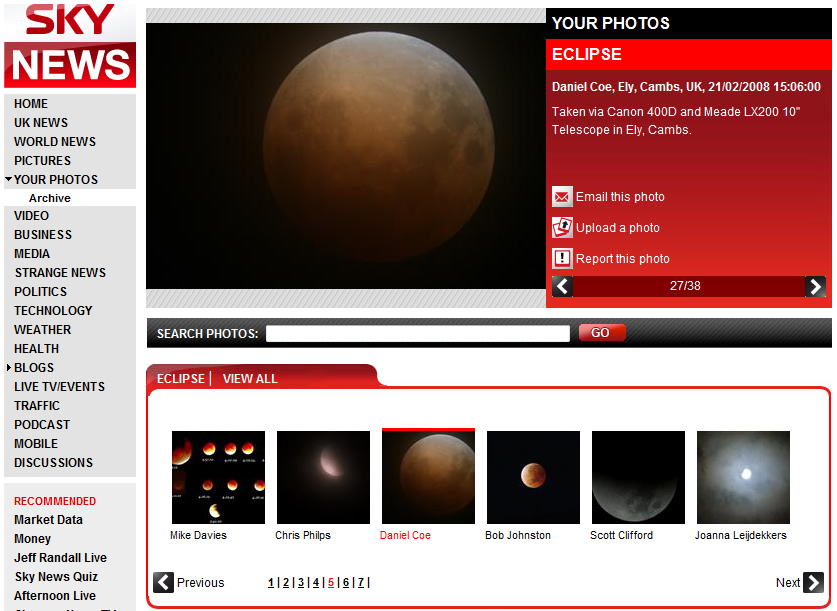
Lunar Eclipse Photo on Sky News

Lunar Eclipse Image on Sky NewsSky News also chose to show the image of the lunar eclipse I took on its website, which can be viewed in full size by clicking on the image on the left.

I think I may submit more astronomy images in the future, certainly if it’s this easy to get them published along with everyone else’s.

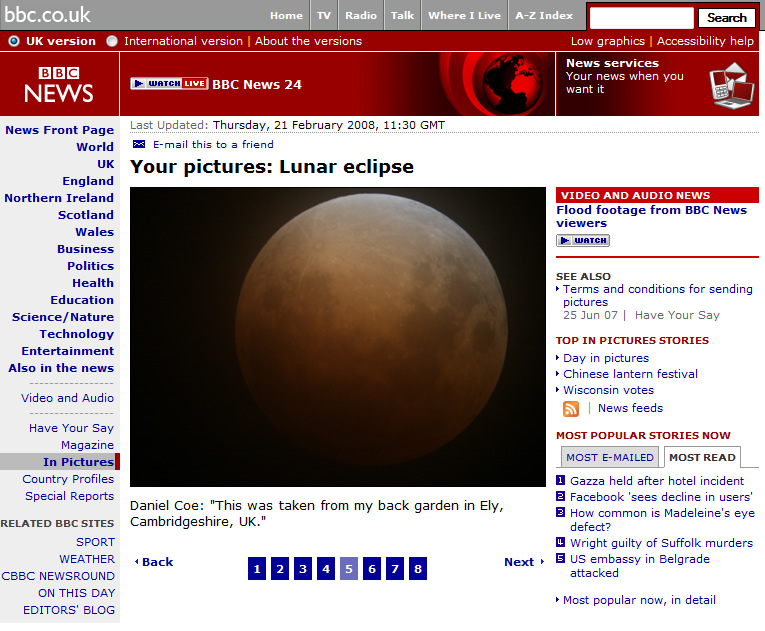
Lunar Eclipse Photo on BBC Site

I sent my eclipse photo to the BBC this morning after writing my post, and they have included it on the BBC web site. Their first question was, “Did I take it?” – classic!

The BBC web page can be viewed by clicking on the thumbnail below, or it can be viewed here, with others:

Lunar Eclipse Image on the BBC web site

https://news.bbc.co.uk/1/hi/in_pictures/7256406.stm

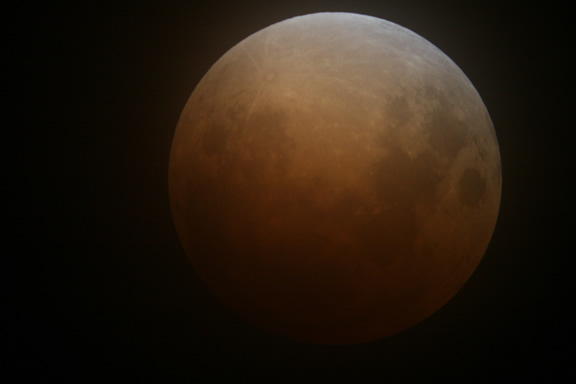
Lunar Eclipse February 2008

I went to bed at 9pm on the 20th February and managed to get up at 2.30am in order to get some images of the lunar eclipse.  I knew it was going to be cloudy tonight, but I thought the bright moon would shine through any cloud, how wrong I was.

Luckily after setting up and letting the LX200 do it’s setup routine, I managed to somehow find focus on the moon and get a few images.  It was difficult to get focus on the moon when it was covered by cloud, but after the first 10 minutes or so the cloud came over and the moon disappeared for the rest of the night, I came in at about 4.30am.

I even had to pull my whole telescope by the leg and re-align it manually as the moon disappeared behind the ridge of my house roof, whilst I waited for a better view.

I think if I could do it all again I would have set up my telescope earlier and found perfect focus then left the telescope alone until the lunar eclipse began, rather than try and find focus when the moon was covered by cloud.

Lunar Eclipse February 2008 as seen in the UK

The image was taken at prime focus f/0 through the telescope using my Canon 400D with an exposure time of 5 seconds at ISO800.

Joining the Cambridge Astronomy Association

On Friday 15th February I took a trip to the Institute of Astronomy in Cambridge, for my first ever meeting of the Cambridge Astronomy Association.  I had viewed their website before, but something caught my eye which was a talk by Ralph Bell from Green Witch in Cambridge about imaging with a web cam and how to process it using Registax.

I did not have a clue what to expect when I arrived at 7.45pm for the talk at 8pm.  I did feel quite privileged to actually be visiting the Institute of Astronomy where actual real professional astronomers study and work, I’m sure most local astronomy groups don’t meet in such elaborate surroundings.

I was given a thoroughly warm welcome by Brian Lister the Chairman and told the basics of the site and what goes on.  The association has regular seminars, outings, open days and more.  They also have a library where you can hire books and a telescope booking system, which allows you to even borrow telescopes and use them at home.

The meeting was attended by what seemed around 50 people. Ralph’s talk lasted about 1.5hrs and thoroughly enjoyable and I was learning new things straight away. I had never really read the Registax manual but Ralph took us through the manual process which was brilliant! Ralph if your reading this can you do a seminar on the Meade DSI?

After the talk we all had tea or coffee and biscuits as well as a chat session. I originally thought I would just attend the meeting for the sum of £1, but I ended up joining for 14  months for the sum of £4.

In summary, find out about your local association or astronomy club and give it a go, you can probably learn a lot and discuss ideas with other astronomers, as the hobby of astronomy sometimes does feel a lonely one, being out on your own in the dark most nights.

Moon Images via Meade DSI Pro

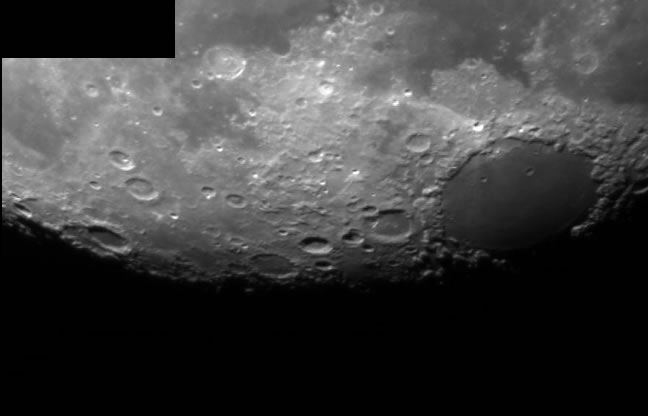
After purchasing my Meade DSI Pro from eBay (see this post about it), I was itching to give it a go. As the moon was out, it seemed the perfect object to use in order to ‘cut my teeth’ on the DSI Pro, especially as I do not have any CCD filters to use yet in order to get colour images.

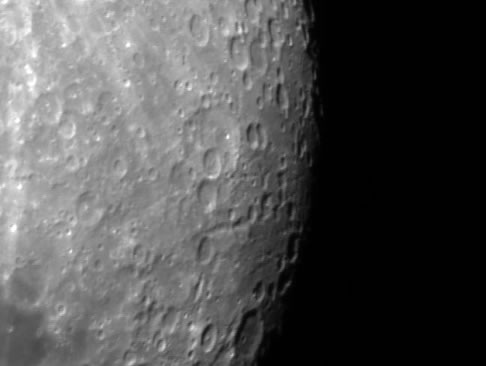
Second Image with Meade DSI Pro Mono and LX200

I was quite amazed at the quality of the images of the moon, and somewhat better than a Philips SPC900 web cam. I did not have the LX200 telescope driven by the Autosuite program, I just used the Autosuite imaging program on it’s own, with the moon preset selected.

Moon with DSI Pro Mono and LX200

Not too bad for my first use, I have since read the PDF manuals, but I think it is really practice makes perfect with the DSI Pro. I think I may also need a f3.3 focal reducer as the f6 focal reducer I have does not quite cut it. I also need the Meade CCD filters, although I think I will try it with normal 1.25″ colour filters first and see what I get.

Mars Observers Guide Book Review

Mars Observers GuideThis version of the Mars Observer’s Guide was published in 2003.  It is one of the pocket sized Philip’s books which retails at under £10.

Mars Observer’s Guide contains a lot of full colour pictures and diagrams all of which are very high quality images. The book begins by looking at the main features of Mars, Martian geology and the seasons of Mars.

There is then a chapter on telescope equipment that can be used to view Mars. It discusses the advantages and disadvantages of refractors, reflectors and catadioptrics.  The rest of the chapter then takes a look at eyepieces, filters and mounts.

There is a small section about the photography of Mars and CCD imaging. A larger section is dedicated to sketching Mars, with lots of help and advice on drawing Mars.

The following three chapters cover what’s happening at Mars in 2003, 2005 and 2007-08, such as highlights of the year, and apparition timetables.  Obviously this book is re-published every few years in order to bring it up to date, so make sure you purchase the latest copy so you have information on Mars to last you the next few years.

At the end of the book there is information about the history of Mars and the influential observers of Mars.  There is then information on all of the space missions to Mars including satellites and Mars landers.

Overall the Mars Observer’s Guide is a useful pocket guide which includes a great deal of useful information about the red planet for education and observers.

Mars Observer’s Guide is available at Waterstones

Mercury and Venus Transit Dates

Since purchasing a Solar filter and mask, together with a lot of information about Mercury being recently published, I wanted to know when the next transits of the Sun occur, so I can view them. Well it turns out the first one is not until 2012.

As seen from Earth, only transits of the inner planets Mercury and Venus are possible. Planetary transits are far more rare than eclipses of the Sun by the Moon. On the average, there are 13 transits of Mercury each century.

So for reference here are the dates for the next transits of Mercury and Venus:

Transits of Mercury Dates

Date Universal Time Separation* (Sun and Mercury)

2016 May 09

14:57

319″

2019 Nov 11

15:20

76″

2032 Nov 13

08:54

572″

2039 Nov 07

08:46

822″

2049 May 07

14:24

512″

 * distance (arc-seconds) between the centers of the Sun and Mercury

Transits of Venus Dates

Date Universal Time Separation* (Sun and Venus)

2012 Jun 06

01:28

553″

2117 Dec 11

02:48

724″

2125 Dec 08

16:01

733″

2247 Jun 11

11:30

693″

First Saturn via Web Cam

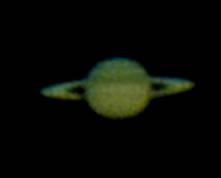
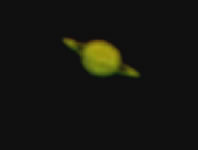
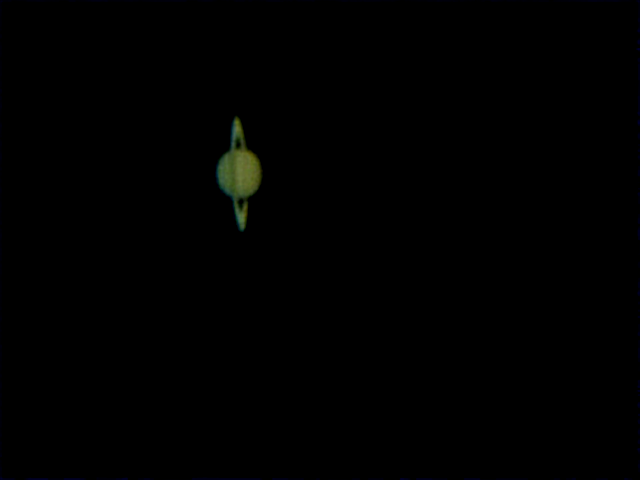
I was looking forward to this time of year and having Saturn back in view.  I started my astronomy hobby in May, and at that point I did get some views of Saturn through my Bresser 130N telescope, but was not really able to image it with a manual scope.

The evening was not great for seeing and I did image Saturn too early on in the evening, when it was low in the sky, which then gives you atmospheric turbulence.

The images were taken using the Philips SPC900 web cam, I can’t remember the exact webcam settings, but it worked out I took nearly 2,000 frames or more to put into Registax 4.

Second attempt at Saturn with SPC900 webcam First Saturn image with SPC900 webcam, low in the sky.

Although the images are not award winners, not too bad for my first real images of Saturn, hopefully these will get better throughout the year and even better when I get used to imaging with the Meade DSI.