Search:

Archive for December, 2007

Stargazing with a telescope bookI actually received this book as part of the AstroBox when I purchased my Bresser Messier 130N telescope. Philip’s produce some really good books on all aspects of astronomy and this book is no different.
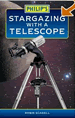
Stargazing with a telescope begins by taking you through how telescopes work and the various types of telescopes available and which may be right for you. The book also contains a lot of information on the various types of mounts from various manufacturers and how they all work. There are also some great tips on what to look for when purchasing a second hand telescope and a section on how to maintain your telescope.

Stargazing with a telescope then moves onto using your telescope, it begins with setting up your viewfinder and getting its alignment correct. The book also describes each part of the telescope in turn and gives help and advice on how to make the most of your nights viewing.

Stargazing with a telescope shows you how to set up and use setting circles, and get used to use RA and Dec settings, and polar align your telescope. It also instructs you how to use the Philips Planisphere.

There is then a section on the planets and how to view the sun and about viewing nebulae and double stars.

The last major chapter is about the extras you can purchase for your telescope including eyepieces, filters, dew shields, power supplies, astrophotography and web cam use.

Finally the book has a number of sky maps depicting the sky throughout the various seasons and a list of the various nebulae and other interesting objects to observe.

At around 190 pages Stargazing with a telescope packs in so much vital information for astronomy beginners.

I actually think that every person starting astronomy should read Stargazing with a telescope. I still am, for reference as well. This book could also be read before you purchase binoculars or a telescope as there is lots of good advice about the different type of telescope and which may be right for you.

This book review is based on the 2004 edition.
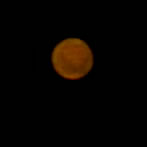
I decided to brave the cold last night and go out at about 10.30pm. I did not find it that cold, although this time I did wear a ninja type balaclava. After setting up, I wondered why I had even bothered coming out as a kind of icy fog then appeared.

I recently purchased a 2″ ED Barlow and wanted to give that a go to try and capture a larger Mars. I did have problems though get Mars on the computer screen via the webcam when using the Barlow. I usually start by getting Mars in the centre of the eyepiece and then I sync the LX200. I then swap the eyepiece for the webcam. I then re-focus and play with the webcam settings and then record.

If I am using a Barlow on top I then add the Barlow, but last night everytime I added the Barlow I lost Mars on the computer screen – very frustrating!

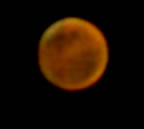
Mars on a cold night in December 2007I wonder if the webcam went to sleep or just gave up, so I tried unplugging the webcam and shutting down VLounge as well. I tried several times then got annoyed and just took some footage without the Barlow lens.

What are the best procedures to follow to get webcam footage when using Barlows? Do I need another piece of equipment to see what is going on at the telescope at the same time as what the webcam can see?

I think the other problem was that the Barlow is 2″ and my eyepieces are 1.25″ and so is the webcam so I kept taking the Barlow out and then I had to add the adaptor back into the telescope to just use a 1.25″ eyepiece.

The Barlow does have a 1.25″ adaptor, I did try to align Mars in the eyepiece when using the Barlow and then swapped the eyepiece for the Webcam, but there was no Mars on the computer screen.

Ho Hum – try again next time, probably when the outside temp is not -2.

Meade MySky

11th Dec, 2007

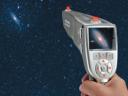
Meade MySkyIt was amazing to see the Meade Sky gadget on Channel Five last night on The Gadget Show, when it was up against the Sky Challenger Picoo Z helicopters and won.

The MySky is definitely an amazing gadget, and particularly useful if you want to add GPS functionality to your Meade Non-GPS telescope.

The only thing that worries me is that from the image above, people may think that what you are looking at on the screen is actually a live shot of what is in the sky, when it is really just images stored on the MySky.

I have written more about the Meade MySky here.

The Meade My Sky is available for £196 online here.

This was my 2nd attempt at imaging Mars with my Philips SPC900 Webcam. This time I decided to go out a bit later, so headed out at around 10.30pm and started imaging at 11pm. Leaving it later in the evening meant that Mars was in Gemini and quite high in the sky, so hopefully the atmosphere would not affect my imaging so much.

This time I made sure that VLounge software was recording at 10fps, I also played around a lot more with the setttings.

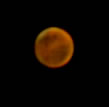
Both images are the same, just at different resolutions and magnifications.

Mars via Webcam 3rd Dec 2007 Mars via Webcam 3rd Dec 2007

This image was stacked in Registax 4 and the clip length was around 2 minutes. I originally took the clip at 10fps, but now I have looked back at the .avi, it says the fps is 24, this may be because I had to convert the original .mpg clip into an .avi

I did not use a Barlow, so it was taken at f10, I did try to use a 4x ImageMate, but this was just too powerful, so I stuck to just using the webcam with the UV/IR filter.

I am a lot happier with these images, and I am learning a lot doing this. I think the next step is to try and fill more of the CCD chip with the red planet. This means getting hold of a good quality 2x Barlow lens.

Webcam Imaging Mars

2nd Dec, 2007

As Mars is very prominent in the sky at the moment, I feel it is my mission to try and get the best possible image I can whilst I have the red planet in sight.

I purchased a new Baader UV/IR lens the other day so I was really itching to give it a go. I used my Philips SPC900 web-cam, and I took around 100 seconds of video each time at 10 frames per second and 15 frames per second, in order to get lots of frames to put into Registax.

I still do all my recording in the supplied Philips VLounge software, although I don’t think this is the best way to go about it, one reason is because the output format is .MPG and I have to then convert it to .AVI to get it into Registax, which is a real pain.

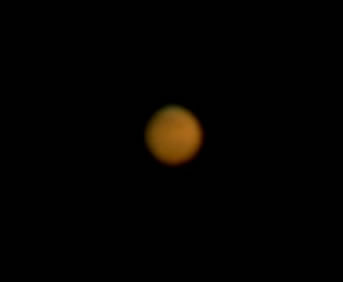
Mars via Webcam

See my second attempt for better Mars images. I have learnt a lot since this post.

You can make out some terrain marks of Mars in the image, but I want more! I still think I can get a better image, as this footage is a bit fuzzy and kind of out of focus. The video was taken when Mars was quite low in the sky. As at the moment I just can’t stay out too late as it’s so cold outside by the time Mars is high in the sky, but hopefully during December and January I should be able to get some more imaging done. I am also reading The Lunar and Planetary Webcam User’s Guide book, so hopefully I should pick up some more tips from this book.