My Whipple Museum Visit
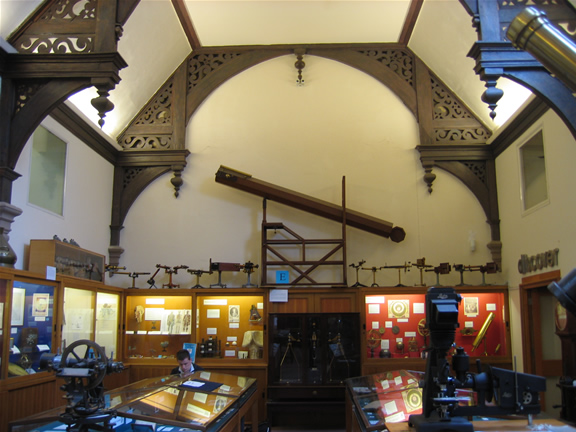 Whilst having a day off in Cambridge I decided to visit the Whipple Museum. It took a few minutes to find the entrance behind a wooden door from the street and then up a flight of stairs, but it’s worth hunting the museum down, admission is free.
The Whipple Museum opens up Monday – Friday 12.30 – 4.30pm only, so don’t visit on a weekend or in the morning during the week!
The Whipple Museum’s collection includes scientific instruments, apparatus, models, pictures, prints, photographs, books and other material related to the history of science. Obviously the most interesting part for me was the collection of telescopes and astronomy related items.
The Whipple Museum was founded in 1944 when Robert Stewart Whipple (1871-1953) presented his collection of scientific instruments to the University of Cambridge.
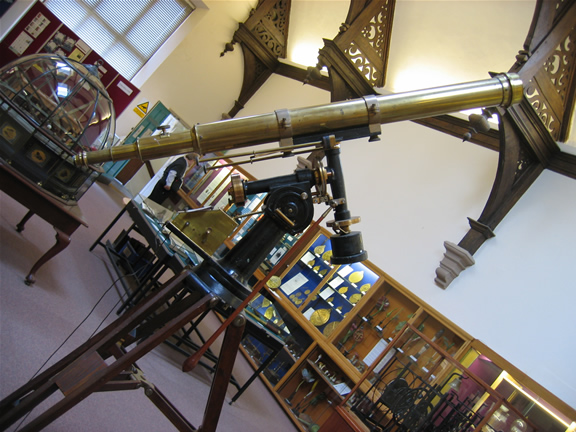
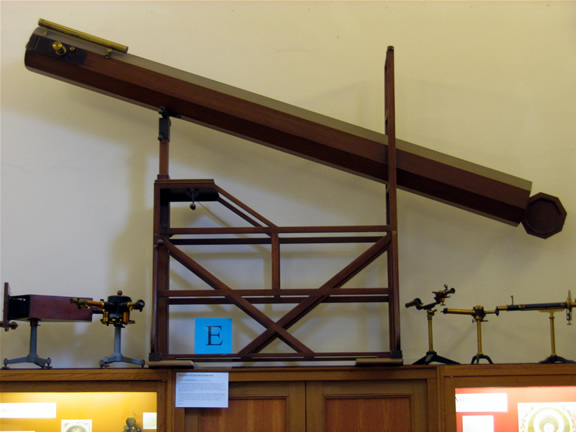 The main telescope I wanted to see was the William Herschel Newtonian Telescope which is hard to miss in the main room.
The telescope takes its name from William Herschel (1738-1822), who achieved public acclaim and royal favour through his discovery of the planet Uranus. He originally called the planet the Georgium Sidus (Latin for ‘George’s Star’), to honour King George III in 1781.
A few years later George III requested that Herschel make a number of telescopes. The Whipple Museum’s example is one of five 10ft reflecting telescopes made in response to that request. Following Herschel’s standard design, the King’s cabinet maker constructed the mahogany stand and tube. Herschel made the optical parts himself.
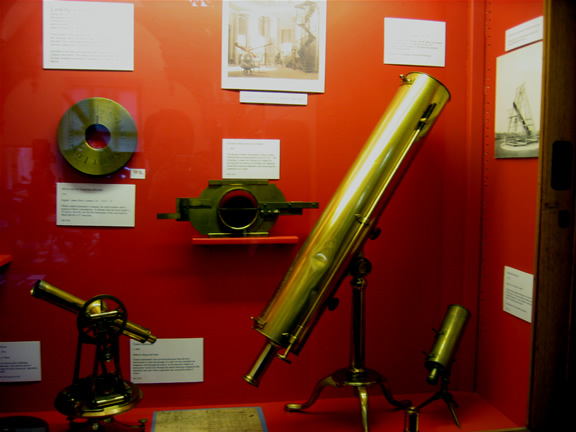 There was also a telescope by James Short dated 1758. Short was known for his observations of comets, transits of Venus and the Northern lights.
Near the entrance of the museum is also a grand planetarium, aptly named the “Grand Orrery Planetarium” made by George Adams.
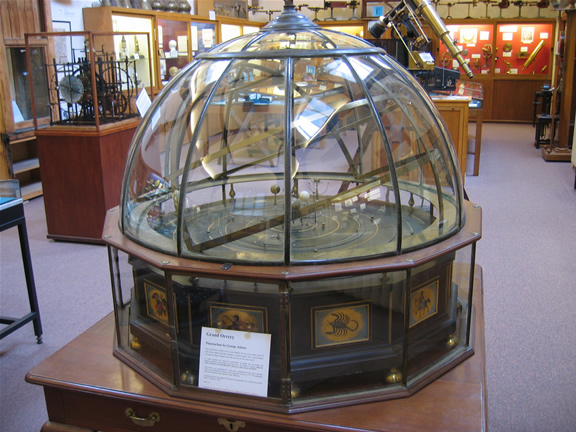 An Orrery is a moving model of the motions of the Earth, Moon, and Sun. Orreries can be used to demonstrate phenomena such as day and night, the seasons, lunar phases, and eclipses.
The planetary model known as the ‘orrery’ takes its name from Charles Boyle, the fourth Earl of Orrery. The London instrument maker John Rowley (circa 1668-1728) made the first orrery for Charles Boyle around 1713, but planetary models have existed since ancient times.
The grand orrery, displays the Sun in the centre, and the 6 planets known at the time with their satellites (four around Jupiter and five around Saturn). Saturn is the outermost planet, shown with its ring and the five satellites discovered by Christiaan Huygens and Giovanni Domenico Cassini between 1655 and 1684. The planets Uranus, Neptune and Pluto had not yet been discovered when this orrery was made.
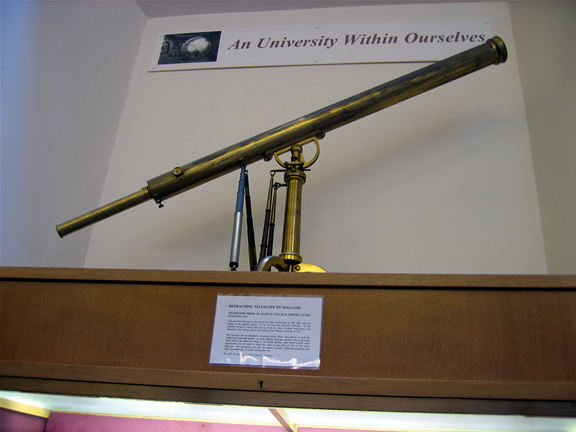 There was also a refracting telescope from the Dollond workshop built around 1800. This was used in St. John’s college observatory, until it was loaned to the Whipple museum in 1951.
The telescope has an altazimuth mounting and there was a mahogany case not on display contains additional eyepieces and filters to protect the eyes when viewing the sun.
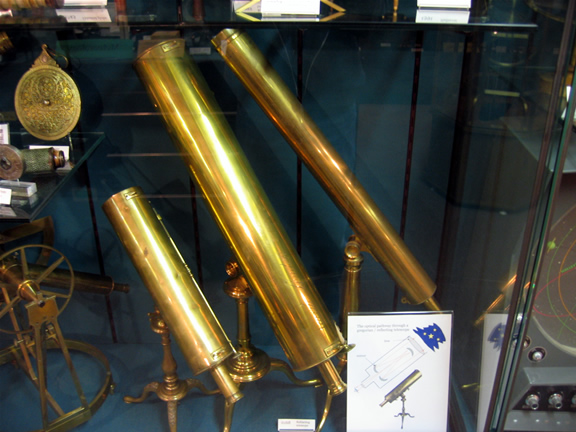
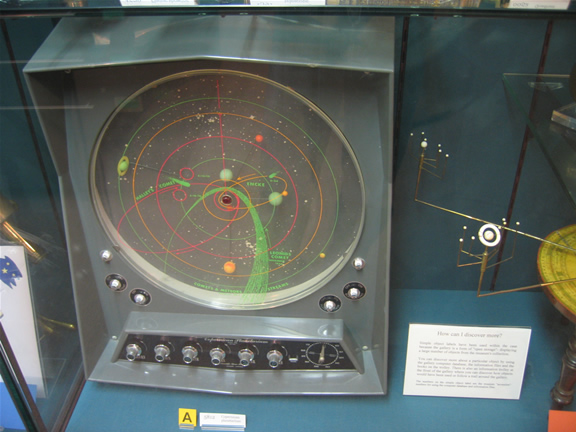
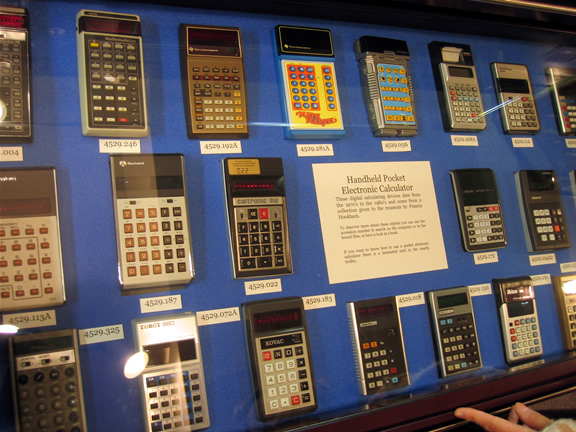
There were many other astronomical items such as other electric planetariums, mirror cells, other brass telescopes. The funniest thing though must have been the collection of old calculators in the second room, there are several drawers in this room, which you can open. There were several drawers of calculators, many of which I remember, including a “Little Professor” calculator.
 We stayed about an hour in the museum, unfortunately the upper room was closed on the day of our visit, so we only viewed two of the rooms.
If you want to know more about the museum the University has set up a really good web site, just search for the “Whipple Museum” in a search engine.
If you are in the Cambridge area though, drop in to the Whipple Museum, it’s definitely worth a visit.