Archive for : February, 2010

Moon Image in Daylight

I managed to get out before the snow set in and the clouds appeared today (Sunday 21st Feb). I went out at about 4pm when it was still light, but the moon appeared directly above me.

I took this image with my cheap refractor but this time I also used my Televue 2x Barlow as well as my Canon 450D camera on ISO800 for about 1/50th exposure. I forgot to add that I also used my 1.25″ Baader Fringe Killer filter.

Click on it to enlarge it.
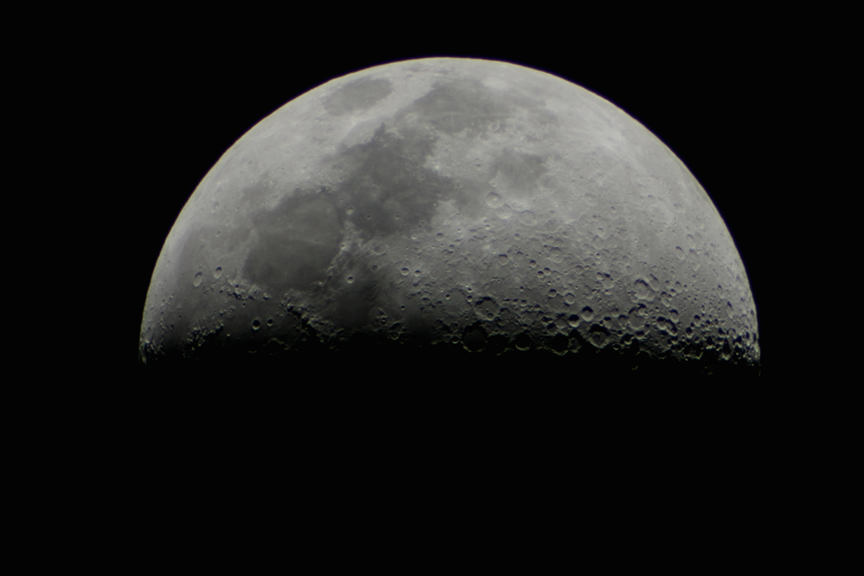
Moon 5pm 21st Feb 2010

Small Sun Spots

Today it’s snowing, but yesterday I managed to view the Sun and do some imaging – crazy weather!

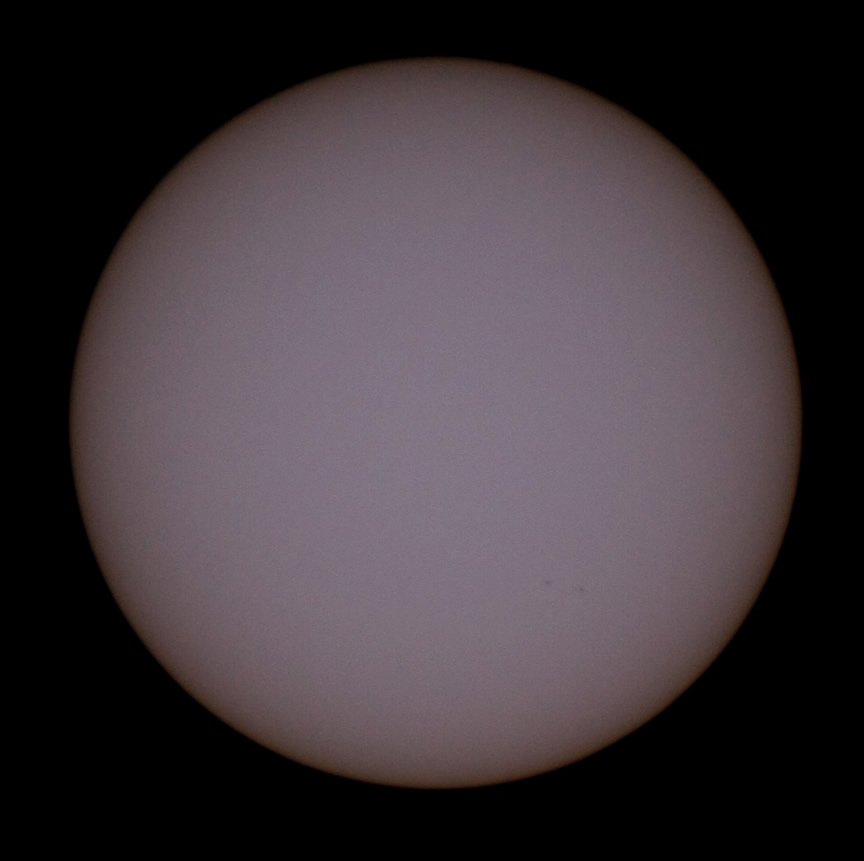
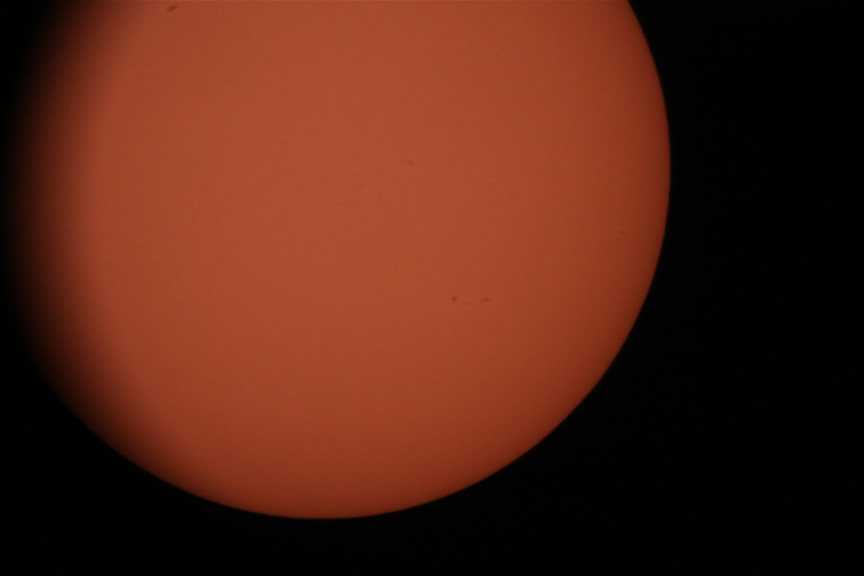
Usually when viewing the Sun at the moment it’s a very uninteresting sinle coloured disc, but today (20th February 2010) I was amazed to see two small sunspots on the face of the Sun.

With this being such an unusual occurence lately I had to get some images.

Before I purchased my guidescope I only had solar filters for the LX200, by way of a hartmann mask and a glass ETX solar filter. Now I also have a mylar sheet type filter for my small refractor. Both provide different colours of the Sun.

The ETX glass solar filter gives an orange colour to the Sun, whilst the mylar sheet provides a kind of white colour.

The sunspots are so small you may have trouble seeing them on these images, but they are on the lower right hand corner. Click on the image to enlarge it.

First the mylar image on the refractor:

Sunspots using mylar paper

The image from my LX200 using an ETX glass solar:

Sunspots via LX200 10" with ETX Glass Solar Filter

Great Orion Nebula Image

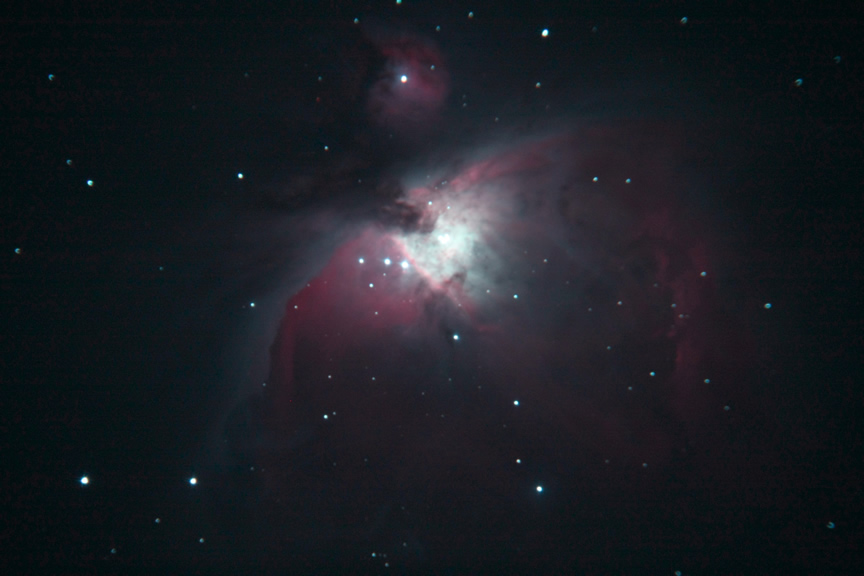
I tried guiding again the other night for the first time in ages. I went back to imaging with the LX200 and guiding with my cheap refractor. I took this image of the Orion Nebula for 2.5mins with my Canon 450D and Astronomik CLS filter attached directly to the Meade LX200 10″ scope.

The initial image did not look that good, but once I had adjusted the separate colour levels and the brightness and contrast the image got a lot bigger and came alive.

It’s definitely one of my best so far, but I am sure I could do even better in the future.

Great Orion Nebula

Pluto Turns Red

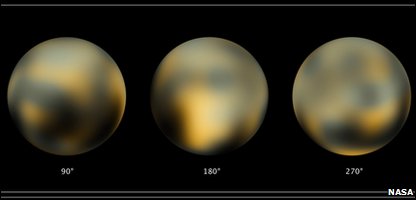
Pluto turning Red

Images taken from Hubble have shown Pluto changing colour.

Nasa says the dwarf planet on the edge of our solar system is becoming increasingly red.

Its illuminated northern hemisphere is also getting brighter.

Nasa’s scientists believe these are seasonal changes – as the planet heads into a new phase of its 248-year-long seasonal cycle.

“These changes are most likely consequences of surface ice melting on the sunlit pole and then re-freezing on the other pole,” Nasa’s Space Telescope Science Institute said in a statement.

The overall colour is probably a result of ultraviolet radiation from the distant Sun breaking up methane on Pluto’s surface. This, scientists say, would leave behind a red carbon-rich residue.

Nasa said: “The Hubble pictures underscore that Pluto is not simply a ball of ice and rock but a dynamic world that undergoes dramatic atmospheric changes.”